

Co-founder of @5PillarsUK. Editor of @1NationMediaX. Host of @bloodxbrospod. 5pillarsuk.com & 1nationmedia.com
Bedford, UK
- Tweets 43,913
- Following 1,147
- Followers 181,583
- Likes 37,812


Dilly Hussain retweeted

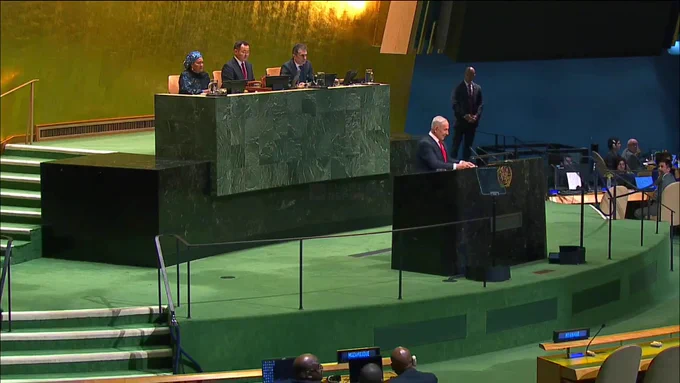
War criminal Benjamin Netanyahu speaking to an empty hall, again.

950
4,373
46,390
1,244,839
Dilly Hussain retweeted

Hats off to @GMB for being the ones to finally shut Zia Yusuf up.
Faded out because his robotic racism is unrelenting.
How this guy is even booked for media beggars belief.

#GMB (finally) get to ask Zia Yusuf about his racist tweet.
As Ranvir Singh points out, Yusuf chooses to deflect rather than answering the question.

92
257
1,340
91,966


Ash Sarkar: “There are mobs of men styling themselves as paramilitaries & you’ve had more to say about refugees than racism…This is small penis behaviour. You guys are just saying well, it’s about the small boats - well maybe it’s about the racism & the thuggery”
#bbcqt

641
997
5,301
318,831

RT @BBCBreaking: Anti-migrant activist Daniel Thomas charged with criminal damage after dinghy slashed in English Channel t.co/wfY5…
229
Dilly Hussain retweeted

Somaliland is SOMALIA! 🇸🇴🇸🇴🇸🇴

What a dramatic downfall for Abdirahman Duale Beyle. He has abandoned his convictions-assuming he possessed any genuine convictions to begin with-for a pittance to the secessionist in Hargeisa while his people in Awdal are suffering!

36
52
583
19,634

The demon himself:
“America deserved 9/11”
That’s as close to a confession we’ll ever get!
 HFR Podcast

1,200
11,810
56,369
2,733,410
Dilly Hussain retweeted

What do they think a lawyer is going to argue? He published a video of himself slashing a boat with a rescue worker onboard. What’s the defence? The man is going to jail.

Tommy, I spoke with Danny’s mother last night. I promised her I would crowdfund an excellent lawyer for him.
Every illegal migrant gets a lawyer. Surely a man fighting for his country deserves a lawyer too.
58
89
1,378
56,613
Dilly Hussain retweeted

Astaghfirullah

Episcopal priestess says Mary assigned Jesus male at birth, but he was trans. And when he was resurrected, he came back as His true, transgender self.

Community note
Before his birth, during his life, & after Jesus rose, he was always referred to as a male.
Gabriel tells Mary she will bear a son & to name him Jesus (Luke 1:31–32).
Woman, behold your son
(John 19:26)
He said to them…
as he was teaching…
(John 20).
catholic.com/magazine/onlin…
121
707
7,981
240,140

Dilly Hussain retweeted

And a man who brutally assaulted a woman at the Reform Party conference got away with a caution.
Don't you dare come at me with "two tier policing"

Man jailed for two years after throwing plastic bottle at police during anti-migrant protest
lbc.co.uk/article/man-jailed…
174
88
576
20,854
Dilly Hussain retweeted

They mocked the images of him shouting without ever telling his story!
This is Shakeel Ahmad Bhat, whose images have been used by some anti-Islam figures as objects of ridicule. They portrayed him as a symbol of Islamic anger and extremism, and his image was printed on clothing, mugs, and other products bearing insulting slogans.
But behind this face is a human being, a family, and a story that deserves to be known.
Shakeel is a Kashmiri activist who advocates for the rights of Muslims in Kashmir, who have faced severe forms of persecution, including the closure of mosques, killings, and arrests, since 1947.
In media interviews, he described how he was tortured and subjected to electric shocks while in detention. He also said that an injury to his arm left him unable to carry things, forcing him to depend on his brothers for financial support.
His sister was brutally treated during a security raid on the family home. According to writer Patrick French, she was thrown from a window, breaking her spine. She died years later while still a young woman.
His father was beaten so severely that his leg was broken, leaving him bedridden for the rest of his life.
Then, in June 2020, his brother Hilal died while Shakeel was imprisoned and separated from his family.
So what was he actually shouting about in the two widely circulated photographs?
In the upper photograph, taken on 19 June 2007, he was participating in a funeral procession and chanting slogans in support of Kashmiri independence.
In the lower photograph, taken on 22 June 2007, Shakeel was taking part in a demonstration protesting the British Queen’s decision to confer a knighthood on Salman Rushdie in recognition of his literary “achievements,” which included writing a book regarded by the protesters as an attack on our Prophet, peace and blessings be upon him.
Each photograph, therefore, belongs to a particular occasion and reflects a particular stance. They are not simply images of an angry face devoid of context.
The persecution suffered by Shakeel and his family takes place with the complicity of the international system, whose media apparatus then uses Shakeel’s image as a means of mockery, ridicule, and alienation.
Imagine how vile it would be for thugs to storm your home and subject you to terrible abuse, then photograph you as you cry out in anguish and pain, only to circulate that image afterward in order to turn people against you and make you an object of ridicule.
There is a lesson in this for us: to love our brothers in faith, to feel their pain, and to understand that the dust beneath their feet is better than those who mock them—people whose outward appearances may seem polished and attractive, while concealing malice, spite, and an absence of morality.
— Dr Eyad al-Qunaibi

28
333
1,103
15,076
Dilly Hussain retweeted

So much for the Patriot Platform not causing trouble then.
They’re causing havoc, frightening the locals, and getting arrested as we speak.

204
262
1,040
163,804
Dilly Hussain retweeted

That’s a huge crowd… 77 delegations reportedly walked out when Netanyahu started his speech.
Arab countries 18
Syria
Palestine
Jordan
Lebanon
Iraq
Saudi Arabia
Qatar
Kuwait
Oman
Yemen
Egypt
Sudan
Tunisia
Algeria
Libya
Mauritania
Somalia
Comoros
Asia — 14
Türkiye
Iran
Pakistan
Afghanistan
Bangladesh
Indonesia
Malaysia
Brunei
Maldives
Myanmar
North Korea
Turkmenistan
Uzbekistan
Kyrgyzstan
Africa — 20
South Africa
Senegal
Djibouti
Angola
Republic of the Congo
Democratic Republic of the Congo
Liberia
Eritrea
Chad
Central African Republic
Madagascar
Niger
Botswana
Uganda
Lesotho
Eswatini
Equatorial Guinea
Mozambique
Namibia
Kenya
Latin America & Caribbean- 17
Suriname
Panama
Venezuela
Antigua and Barbuda
Belize
Barbados
Colombia
Dominica
Nicaragua
Peru
Saint Lucia
Bahamas
Bolivia
Cuba
Guyana
Brazil
Chile
Europe-6
North Macedonia
San Marino
Slovenia
Bosnia and Herzegovina
Spain
Ireland
Pacific-2
Tuvalu
Tonga
Total: 77 delegations.
456
2,188
14,103
1,177,471


Dilly Hussain retweeted

Tommy Robinson’s side piece, Danny Tommo, is going to prison. Tommy Robinson’s “ex-wife” pleaded guilty to hiding company financial records, and she could also go to prison.
He’s going to be sniffing his head off tonight to cope.
75
162
1,920
24,510
Dilly Hussain retweeted

Surprise surprise. Labour Party candidate Sagal Abdi Wali turned up to the Jewish community hustings in Holborn and St Pancras tonight after snubbing the Muslim hustings.
Knew she would. Same old Labour Party.
Muslims, DO NOT vote for her in the by-election.
35
101
572
12,273
Dilly Hussain retweeted
The police just arrested a few of the Patriot Platform so the rest of them took their balaclavas off.
That was easy then. 👍

152
614
3,547
144,523

