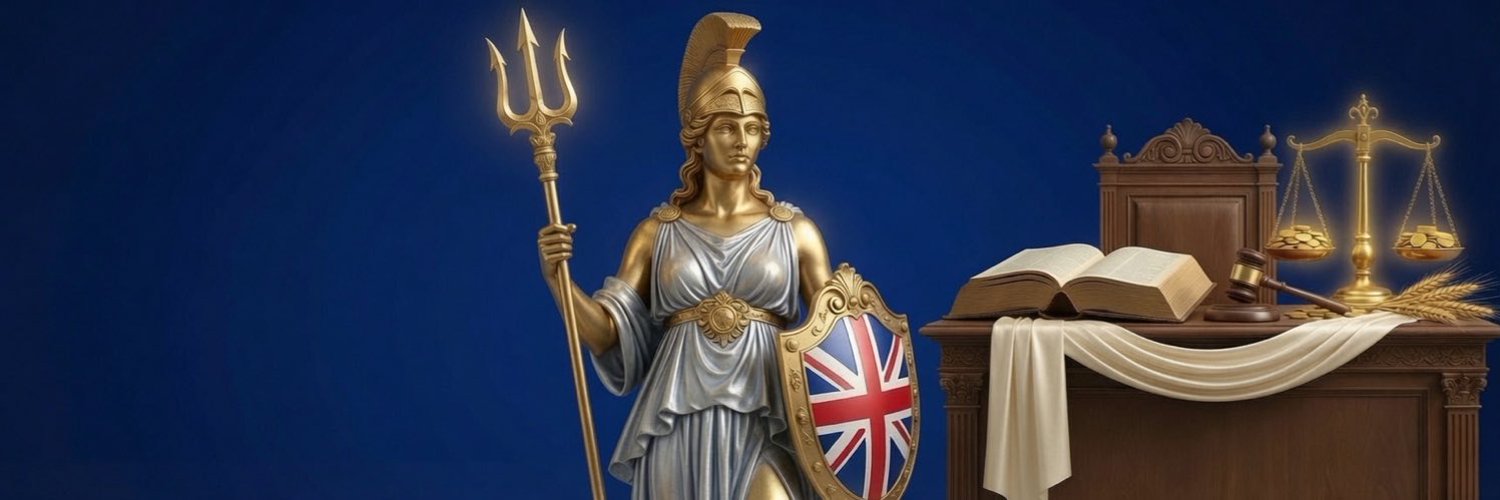

Writing on your rights, free markets, constitutional liberty, rule of law and the history behind them. ⚖️ 🇬🇧 📜
- Tweets 29,222
- Following 1,241
- Followers 681
- Likes 63,637


Pinned Tweet

What does this account stand for?
It's a home for the tradition of English liberty.
Blackstone, Locke, Smith, Burke, Cobden, Gladstone and Hayek.
We write on:
⚖️ Your rights as an Englishman
🏛️ Individual liberty under law
💷 Sound money & why it matters
📈 Free markets & economic history
📜 Constitutional government & the rule of law
These ideas helped build the free and prosperous world we inherited, but are in danger of losing.
They shaped Britain’s constitutional liberty.
They created the conditions for the Industrial Revolution.
They spread across the English-speaking world.
They played a leading role in the founding of America🇺🇸.
These are not relics of a bygone era.
They are essential to understanding the problems of today.
Join us. ⚖️ 🇬🇧 📜


3
1
5
1,460
Rule of Law ⚖️ retweeted
YOU HAVE MORE RIGHTS THAN THE STATE WANTS YOU TO KNOW ABOUT. ⚖️
Most people know more about their star signs than their rights.
That is a dangerous ignorance.
You have the right to:
Liberty — you may do anything the law has not lawfully forbidden.
A Fair Trial — before an independent and impartial court.
Habeas Corpus — to demand that the lawfulness of your detention be justified.
The Presumption of Innocence — the burden of proof is on the accuser, never on you
Right to Remain Silent — You do not have to answer questions put to you by police or the state.
These are not gifts from government.
They are part of your constitutional inheritance built through centuries of struggle, conflict and sacrifice.
But rights have a weakness:
They are only as effective as the people who know them, assert them and can defend them.
A right forgotten is a right soon lost.
The State does not always need to abolish a right openly.
Sometimes it is enough for a generation to forget knowing it exists.
Know your rights.
Use your rights.
Defend your rights.
⚖️🇬🇧

1
90
THE 7️⃣ PILLARS OF A FREE SOCIETY.
A free society does not rest upon liberty alone. It rests upon the moral, cultural, legal, and civic foundations that make liberty possible.
1️⃣ GOD — The source of moral order, standing above the will of rulers.
2️⃣ TRADITION — The accumulated wisdom of past generations, carrying inherited principles into lived experience.
3️⃣ LIBERTY — The dignity and inherited freedoms of the individual.
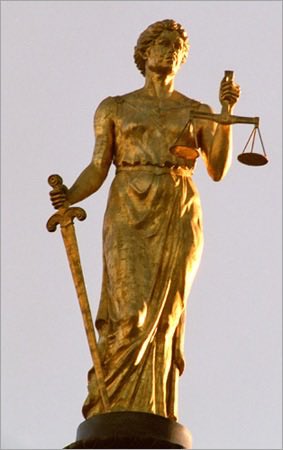
4️⃣ LAW — The restraint of rulers and the protection of rights.
5️⃣ REASON — The pursuit of truth, understanding, and sound judgment.
6️⃣ CONSTITUTION — The architecture through which power is organised, limited, and held accountable.
7️⃣ CIVIC DUTY — The responsibility to preserve liberty and pass its inheritance to those who come after.
Break one pillar, and the rest cannot bear the weight.
67
Rule of Law ⚖️ retweeted
NO PRODUCTION, NO CONSUMPTION. 🏭⚖️
You cannot consume what has not first been produced.
Every meal.
Every home.
Every shirt.
Every car.
Every phone.
Before it can be consumed, someone must produce it.
Land. Labour. Capital. Enterprise.
These are the foundations of production and production is the foundation of wealth for a nation.
Demand tells producers what people want.
Production makes it possible to have it.
A government cannot create prosperity simply by ordering more spending, redistributing existing wealth, or stimulating demand while production is being strangled by taxes, regulation and political control.
If production falls far enough, the consequences cannot be legislated away:
Higher prices. Shortages. Rationing. Empty shelves. Falling living standards.
There is no economic magic by which society can consume more than it produces for very long.
Wealth must first be created before it can be consumed, saved, invested, traded or redistributed.
That is why a free and prosperous economy must protect the conditions of production.
Production first.
Then consumption.

2
3
80
GOD · LAW · REASON
I Ultimate moral authority
What is the source of moral truth, and does it stand above the State?
II Legal restraint
How does a society limit political power, and can rulers be held accountable?
III Reason and knowledge
What methods are used to discover truth, interpret law and distinguish justice from injustice?
IV Institutional embodiment
How are those ideas expressed in constitutions, courts, rights and political practice?

54
GOD, LAW & REASON ⚖️
The Pillars of British-American Political Order🇬🇧🇺🇸.
I. GOD 🙏
There is a moral order above the State.
Kings, governments and majorities are not the ultimate measure of right and wrong.
Human authority is accountable to something higher than itself.
II. LAW ⚖️
Power must be restrained by law.
The ruler is not above the law.
From Magna Carta and the common law to Parliament, the courts and constitutional government, liberty came to be understood not as permission from government, but as something government itself must respect.
III. REASON 🧠
Truth can be sought through reason.
The natural order can be investigated. Arguments can be tested. Laws and institutions can be examined against principles of justice.
Science, philosophy, commerce and constitutional thought all benefited from this confidence in rational inquiry.
GOD created the moral order.
LAW restrained power.
REASON sought to understand it.
Forget God, and morality loses its anchor.
Forget Law, and power loses its limits.
Forget Reason, and truth becomes whatever power says it is.
Forget all three and society crumbles into totalitarianism.

47
Rule of Law ⚖️ retweeted
Principles of British 🇬🇧 Law.
1️⃣ Rule of Law.
No one is above the law — not the King, not ministers, not officials.
2️⃣ Parliamentary Sovereignty.
Parliament is the supreme law-making authority.
3️⃣ The Common Law.
Law developed case by case, judgment by judgment, over centuries.
4️⃣ Due Process.
The state cannot lawfully punish, imprison or deprive a person of rights arbitrarily. Power must be exercised according to law, and legal wrongs must be determined through lawful process.
5️⃣ Habeas Corpus.
If the state detains you, it must be able to justify that detention before a court. Liberty cannot simply be taken on the say-so of public authorities.
6️⃣ Trial by Jury.
Guilt is determined by ordinary citizens rather than government officials.
7️⃣ Presumption of Innocence.
A person is innocent until proved guilty. The burden lies on the prosecution — not on the accused to prove his innocence.
These principles are more than legal rules.
They are barriers against totalitarian State power.
A free people must understand them, use them and defend them or they will quietly erode.

1
1
205
Rule of Law ⚖️ retweeted
25 Terms of English Law Every Man Must Know 🇬🇧⚖️
1️⃣ Liberty
The freedom to act unless lawfully restrained. Everything below exists to protect it.
2️⃣ Rule of Law
No one is above the law, including the state.
3️⃣ Common Law
Law developed by judges through precedent, distinct from statute enacted by Parliament.
4️⃣ Magna Carta 1215.
The first written check on royal power. The root of due process.
5️⃣ Habeas Corpus
“You must have the body.” No one may be detained without lawful cause shown to a court.
6️⃣ Parliamentary Sovereignty Parliament is the supreme law-making body. No Parliament can bind its successor.
7️⃣ Bill of Rights 1689
Curbed royal power, entrenched Parliament’s authority, protected free speech in Parliament.
8️⃣ Petition of Right 1628
No taxation without consent. No imprisonment without cause.
9️⃣ Prerogative
Powers historically belonging to the Crown, now largely exercised by Ministers.
1️⃣0️⃣ Separation of Powers Legislature, executive and judiciary kept functionally distinct.
1️⃣1️⃣ Natural Justice
The right to a fair hearing and an impartial decision-maker.
1️⃣2️⃣ Due Process
Fair and lawful procedure before the state may act against you.
1️⃣3️⃣ Presumption of Innocence Guilt must be proven, not assumed.
1️⃣4️⃣ Trial by Jury
Judged by your peers, not by the state alone.
1️⃣5️⃣ Writ
A formal court order commanding a person or public authority to do, or refrain from doing, something.
1️⃣6️⃣ Judicial Review
The courts’ power to review the lawfulness of government and public-authority action.
1️⃣7️⃣ Ultra Vires
“Beyond the powers.” When a public body acts outside its legal authority.
1️⃣8️⃣ Jurisdiction
The legal authority of a court or public body to hear a matter or exercise a power.
1️⃣9️⃣ Remedy
The legal means by which a court enforces a right or corrects a wrong.
2️⃣0️⃣ Injunction
A court order requiring someone to do, or stop doing, something.
2️⃣1️⃣ Trespass
The founding common law action protecting person and property from unlawful interference.
2️⃣2️⃣Precedent
A past judicial decision that binds future cases with similar facts.
2️⃣3️⃣Statute
A law enacted by Parliament, as distinct from common law.
2️⃣4️⃣Public Authority
A body exercising public power, such as a government department, council, police force, or regulator, and therefore subject to legal constraints.
2️⃣5️⃣ Constitutional Convention An established political practice governing how power is exercised, binding by custom rather than statute.

1
1
123
🇬🇧 THE ARCHITECTURE OF THE BRITISH STATE.
The Crown. Parliament. Government. The Courts.
Each has a role. Each operates within a framework of law.
Beneath them all stands the Rule of Law.
Public power must have a legal source.
Understand the structure. Know your rights.

Made with AI
153
THE THREE BRANCHES OF GOVERNMENT 🇬🇧⚖️
Who makes the law?
Who governs?
Who judges?
In Britain, these functions are divided between three principal branches of public power:
🏛️ 1. THE LEGISLATURE — PARLIAMENT
Makes and changes the law.
Parliament consists of the Crown, House of Commons and House of Lords.
Its functions include:
• making legislation
• scrutinising Government
• approving taxation and spending
• debating matters of public importance
Parliament is the supreme legal authority under the principle of Parliamentary Sovereignty.
👑 2. THE EXECUTIVE — GOVERNMENT
Administers and exercises public power.
The Government consists of the Prime Minister, Cabinet and other ministers, supported by the Civil Service and government departments.
Its job is to:
• develop policy
• administer the country
• deliver public services
• exercise powers granted by law
• put legislation into effect
And crucially:
Government is not Parliament.
The Government is accountable to Parliament.
⚖️ 3. THE JUDICIARY — THE COURTS
Interprets and applies the law.
The judiciary:
• determines disputes
• conducts criminal trials
• interprets legislation
• protects due process
• ensures public authorities act within their legal powers
An independent judiciary is a fundamental part of the rule of law.
Parliament makes the law.
Government exercises public power.
Courts apply and interpret the law.
That is the architecture of constitutional government. 🇬🇧⚖️

Made with AI
1
125
YOUR RIGHTS AS AN ENGLISHMAN ⚖️
You do not have rights merely because Parliament permits them.
You do not have rights because a politician says you do.
A free people who do not know their rights cannot reliably defend them.
You inherit a constitutional tradition which, through the great charters and Acts, the common law and constitutional conventions, recognises and protects certain fundamental rights and liberties.
Trial by jury.
Habeas corpus.
Freedom of speech.
Freedom of conscience.
Security of your person, home and property.
The right to seek justice and a fair trial before an independent court.
No punishment without law.
No taxation without parliamentary consent.
The right to petition your government.
They are liberties won, defended and handed down through centuries of English constitutional history.
These are not merely the liberties of your ancestors.
They remain your rights and liberties today — right now.
Every generation that forgets this inheritance risks losing it quietly, administratively, incrementally, without a shot being fired.
Know them, use them and defend them ⚖️🇬🇧.

1
87
GOD AND LAW ⚖️
Where does law ultimately come from?
For centuries, English constitutional thought held that human law was not the highest law.
Law does not ultimately begin with the State.
Above the State stands a higher order — natural law, grounded ultimately in God.
Blackstone expressed this starkly: the law of nature is “superior in obligation to any other,” and human laws contrary to it have no validity.
The same intellectual tradition crossed the Atlantic🇺🇸.
In 1776, Jefferson opened the Declaration of Independence with “the Laws of Nature and of Nature’s God” and declared that people are “endowed by their Creator with certain unalienable Rights.”
The principle is simple:
Law and rights come from nature and God, not rulers or States.

99
What is the gold standard?
A gold standard is a monetary system in which a currency is fixed to a specific quantity of gold, with notes 💷💵 convertible into gold at the official rate.
In simple terms, a pound or dollar represented a fixed amount of gold.
“I promise to pay the bearer on demand.”
That meant governments could not simply create unlimited money and credit without putting pressure on their ability to honour that promise.
Three important consequences followed:
1️⃣Money faced a limit. Governments and banks could not create unlimited money and credit without putting pressure on the gold reserves supporting the system.
2️⃣Sustained inflation was harder to maintain. The gold anchor constrained monetary expansion and helped preserve the long-term value of money.
3️⃣Currencies were more stable against each other. Because countries fixed their currencies to gold, exchange rates between them were largely fixed too.
By the late 1600s, Britain’s silver coins were being clipped and counterfeited, undermining trust in the money people carried in their pockets.
The Great Recoinage of 1696 replaced millions of worn and clipped coins with reliable new ones. Isaac Newton, Master of the Mint, helped oversee the operation.
The lesson was simple:
Money is only useful when people can trust its value.
The gold standard took that principle further: money needed an anchor outside government control.
And here is the deeper point:
A monetary standard is also a constraint on political power.
When money is no longer anchored by a fixed standard, a crucial restraint on government disappears.
The power to create money is the power to dilute its value — quietly transferring wealth from the people to the government without a visible tax, a vote, or their consent.
The gold standard was never merely about gold.
It was about limiting the monetary power of government.

1
2
2
156
THE CONSTITUTIONAL ORDER OF GREAT BRITAIN 🏴🇬🇧
The institutions, laws and principles that create, constrain and legitimise public power in England and Wales.
👑 THE CROWN — Constitutional Head of State
Represents the nation. Acts on the advice of Ministers. A symbol of continuity, stability and national unity.
🏛️ PARLIAMENT — Sovereign Legislature
Makes the law. Holds government to account. One Parliament cannot ordinarily bind its successors.
⚖️ GOVERNMENT — Executive
Sets policy and administers the law. Must act within legal limits. Accountable to Parliament.
🧑⚖️ THE COURTS — Independent Judiciary
Interpret and apply the law. Protect rights and liberties. Hold public authorities to the law.
📖 COMMON LAW
Law developed by judges over centuries. Recognises and protects fundamental liberties.
📜 CONSTITUTIONAL STATUTES
Fundamental Acts including Magna Carta 1215, Petition of Right 1628, Habeas Corpus Act 1679, Bill of Rights 1689 and later legislation.
⚡ PUBLIC POWER MUST HAVE A LEGAL SOURCE
Power is lawful only when it has a legal source and is exercised within the limits of that law.

73
Know these three sentences.
1️⃣ IF ARRESTED
“I am exercising my right to silence. I want a solicitor before I answer any questions.”
2️⃣ IF POLICE COME TO YOUR DOOR
“Do you have a warrant? I’d like to see it before you enter.”
3️⃣ IF UNLAWFULLY DETAINED
“I do not consent to this detention. I am invoking my right to Habeas Corpus.”
Three sentences.
Eight centuries of liberty behind them.
Know them.

1
77
Freedom to Work Act 2026
A Bill to restore the ancient right of a man to sell his own labour at a price he himself judges fit, without the interference of the State.
This Act would:
1️⃣Repeal the statutory minimum wage as a precondition to lawful employment.
2️⃣Restore the right of individuals and employers to agree wages freely, subject to common-law contract principles, genuine protections against fraud and duress, and existing safety and working-condition law.
3️⃣Replace statutory wage-fixing with free contract and disclosure: work by agreement, subject to clear rules against deception, rather than work only at a price set by the State.
The statutory minimum wage stops employers and workers from agreeing their own price for work. Instead, the State sets one price for everyone, and it’s illegal to work for less. The result is plain to see. When the State forces wages above what many jobs are actually worth, those jobs simply stop existing. Entry-level roles disappear. Young people and those without experience can’t get a foot on the ladder — not because they don’t want to work, but because the law makes it illegal for anyone to hire them at a price both sides would accept. So instead of low-paid jobs, we get no jobs: replaced by machines, cut from the payroll, or never created at all.
The presumption of liberty is restored:
A man may sell his labour on terms he himself accepts. If the State says he may not, the State must show lawful cause.

1
126
Rule of Law ⚖️ retweeted
Permission to Build Act 2026
A Bill to restore the ancient right to build upon private land without discretionary planning permission.
Since 1947, no citizen has held an unqualified right to develop land he lawfully owns.
The planning system reversed the presumption of liberty: instead of the State having to show lawful cause to restrain a man’s use of his property, the citizen must first ask permission.
Nearly 80 years later, the result is a system in which the State decides what may be built, where, and often whether anything may be built at all.
This Act would:
1️⃣Repeal the requirement for discretionary planning permission as a precondition to development.
2️⃣Restore the right of individuals and companies to build upon land they lawfully own, subject to common-law nuisance, building and safety regulations, and genuine protections for neighbouring rights and shared amenity.
3️⃣Replace discretionary permission with registration and compliance: build by right, subject to clear rules, rather than build only by permission.
The presumption of liberty is restored:
A man may build upon his own land.
If the State says he may not, the State must show lawful cause.
Property is not truly private if its lawful use depends upon permission from the State.

2
3
15
428
Rule of Law ⚖️ retweeted
The 4 Factors of Production — and Why They Matter
All wealth creation ultimately depends on four things.
1️⃣ Land — natural resources: soil, minerals, energy. Limited in supply, making property rights and access crucial.
2️⃣ Labour — human effort, physical or mental. Skill, knowledge and freedom make it more productive.
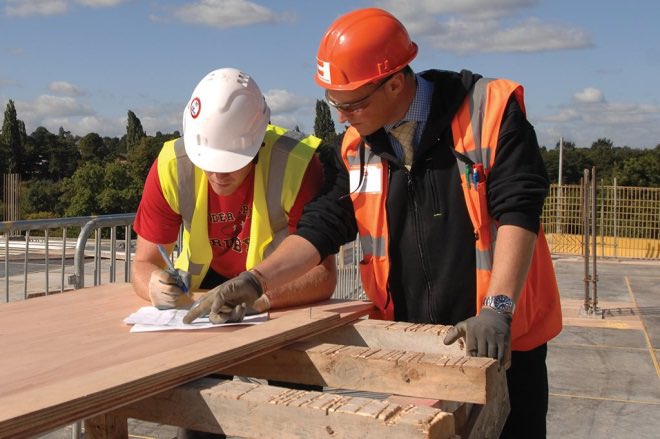
3️⃣ Capital — tools, machines and infrastructure that multiply labour’s productivity. A spade digs; an excavator transforms what one worker can produce.
4️⃣ Enterprise — the entrepreneur who combines the other three, organises production, spots opportunities and bears the risk.
The lesson is simple:
Wealth is created through production by combining land, labour, capital and entrepreneurship.
Britain🇬🇧 needs to increase production and productivity.
Understanding the fundamentals of production is therefore crucial.



1
1
131