🔬 Smart science facts • Space 🚀 Physics ⚛️ Biology 🧬 Tech 🤖 • Learn something new every day

Science Hub
Goosebumps triggered by music are known as frisson, a powerful emotional and physical reaction to sound. Certain melodies, harmonies, or sudden musical changes can activate the brain’s reward system, releasing dopamine and creating chills, tingling, and goosebumps.
11
31
721
🚨 The Trump administration fired its climate researchers — but the scientists refused to let public climate data vanish. Meet the woman behind this work. In 2025, the federal government terminated operations of NOAA's Climate. gov, laying off its staff and making decades of climate data, maps, and reports difficult for the public to find. Rather than letting 15 years of vital research fade into obscurity, former program director Rebecca Lindsey, along with her sister Mary Lindsey and colleague Anna Eshelman, decided to take matters into their own hands. The trio rallied the scientific community and successfully launched Climate. us on June 23, 2026 — a nonpartisan, nonprofit website dedicated to keeping complex climate information accessible to educators, farmers, and everyday citizens. The grassroots resurrection of this crucial resource was powered entirely outside government infrastructure, utilizing over 2,500 small donations and the expertise of more than 80 volunteer scientist reviewers. Climate. us restores access to interactive climate dashboards, expert science explainers, and the now-deleted Fifth National Climate Assessment. By rebuilding essential features like search systems and data visualizations, these scientists are ensuring that public knowledge remains shielded from political interference. As Rebecca Lindsey noted, trusted climate science should not disappear just because political administrations change. source: Barnes, J. (2026). Trump dismantled a federal climate website. These women rebuilt it. The 19th News.
14
23
48
1,947
🚨 Chinese scientists just detected an unexplained 71-terahertz vibration inside mitochondria — the microscopic "powerhouses" of living cells. The work was published by researchers at the University of Shanghai for Science and Technology. The signal, which oscillates 71 trillion times per second, was detected in living human cells and mouse tissues but vanished completely once the cellular structures were dried or disrupted. This dependency on structural integrity led the scientific team to propose that mitochondria may utilize a quantum hybrid state, known as a polariton, created by light-matter coupling inside their highly folded inner membranes to optimize how they function. To test this theory, the scientists stimulated human cell cultures with weak infrared light tuned to specific frequencies associated with this quantum state. The experiment yielded a stunning 10 percent jump in the production of adenosine triphosphate (ATP), the vital molecule that fuels almost every biological function in our bodies. While the study was published as a bioRxiv preprint and is still awaiting peer review, it represents a monumental leap for quantum biology. If verified, the ability to manipulate these quantum channels could pave the way for revolutionary treatments targeting metabolic diseases, aging, and chronic genetic conditions. source: Song, B., et al. (2026). A quantum state of mitochondria in the living cell. bioRxiv.
71
448
1,553
66,371
The idea is surprisingly simple: instead of hiding your face, distort it just enough that a facial-recognition system struggles to understand what it is seeing. Dutch designer Jip van Leeuwenstein created the transparent mask as part of a project called “Surveillance Exclusion” while studying at the Utrecht School of the Arts. The design uses a clear, curved and ribbed surface that bends light passing through it. Facial-recognition systems typically detect landmarks such as the eyes, nose, mouth and jaw, then convert their spatial relationships into a mathematical representation that can be compared with stored faces. The mask changes how those landmarks appear to a camera. Humans can still see much of the wearer’s face and expressions, but the altered geometry can make automated detection and identification more difficult. It is essentially a physical example of adversarial design: changing what a machine sees without completely hiding the underlying object from human perception. However, it isn’t a guaranteed invisibility cloak. Modern recognition systems can be retrained, combine multiple camera angles, and increasingly use other biometric clues such as body shape, gait and movement. The effectiveness would therefore depend heavily on the particular surveillance system. The project was actually created years ago and has recently resurfaced online. Its underlying question has only become more relevant: as cameras become better at identifying people automatically, privacy may increasingly depend on understanding the difference between how humans see us and how machines see us. Source: Jip van Leeuwenstein, Surveillance Exclusion; Utrecht School of the Arts
32
117
361
22,629
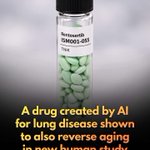
An AI-designed drug for chronic lung disease dramatically reversed the markers of biological aging in its first clinical trials. In a clinical trial published in Nature Biotechnology, scientists evaluating the drug rentosertib — developed by generative artificial intelligence for idiopathic pulmonary fibrosis (IPF) — discovered it also significantly lowered biological age. Evaluating blood-protein samples from 42 trial participants across six independent 'proteomic aging clocks,' the researchers observed a consistent shift toward younger biological profiles, with some models estimating a decline in biological age of up to several years. In contrast, patients receiving a placebo showed virtually no change or even slight increases in their biological aging markers over the 12-week study. While these results are highly promising, researchers caution that they are still preliminary. Because idiopathic pulmonary fibrosis is an age-related illness characterized by severe tissue damage and inflammation, it remains unclear whether rentosertib directly targets the aging process itself or if treating the underlying lung disease simply altered the specific blood proteins tracked by the aging clocks. Furthermore, because the trial was small and lasted only three months, scientists emphasize that larger, longer-term clinical studies are required to verify if these biological age reversals translate to lasting, tangible health benefits for patients. source: Insilico Medicine. (2026). Integration of proteomic aging clocks in a phase 2a clinical trial of rentosertib. Nature Biotechnology.
21
144
510
16,532
🚨Researchers have created a targeted nanotherapy that has shown rapid effectiveness against endometriosis in early trials. A single dose of this therapy successfully reduced both endometriosis symptoms and overall disease progression in preclinical trials. Published in the journal Advanced Healthcare Materials, the study details a novel treatment that uses nanoparticles to deliver a commonly available drug, niclosamide, directly to disease-specific immune cells. In mouse models, just one dose of the treatment reduced both endometriosis symptoms and overall disease progression, offering a major breakthrough for a chronic condition previously considered incurable. By delivering the drug directly to the lesion sites, the nanocarrier overcomes the low solubility of the medication, minimizing the risk of adverse effects. Endometriosis is a debilitating condition affecting approximately 10% of women globally, characterized by painful uterine-like tissue growing outside the uterus, which can lead to severe pain, chronic fatigue, and infertility. Current options are largely restricted to surgeries that offer temporary relief or hormonal therapies that carry harsh side effects such as bone density loss and premature menopause. This new nanotechnology-driven approach represents a paradigm shift toward non-hormonal, highly precise management of the disease. While human clinical trials are still on the horizon, this milestone offers promising hope for millions of women seeking long-term relief without compromising their reproductive health. source: Washington State University. (2026). WSU team develops potential treatment for endometriosis. Advanced Healthcare Materials.
4
37
113
4,071
If current generational trends continue, Christians will make up less than half of the United States population in a few decades. A landmark demographic study from the Pew Research Center suggests that America’s religious landscape is undergoing a historic transformation. If the current rate of individuals switching their religious identity remains steady, the percentage of Christians in the U.S. could drop below 50% by 2060, and potentially as early as 2045 if departures accelerate. This shift is primarily driven by young adults between the ages of 15 and 29 who were raised Christian but now identify as atheist, agnostic, or "nothing in particular." Crucially, being religiously unaffiliated does not necessarily equate to a total rejection of spirituality or belief in a higher power. While these projections outline a dramatic secular shift, the future is not set in stone. Newer data from Pew's 2023–24 research reveals that 62% of U.S. adults still identify as Christian — a significant decrease from 78% in 2007, but a figure that has shown signs of stabilizing in recent years. This potential pause in the long-term decline highlights the complexity of religious forecasting, as factors like birth rates, immigration, and intergenerational transmission continue to shape the nation's spiritual makeup. source: Pew Research Center. Modeling the Future of Religion in America.
5
7
17
860
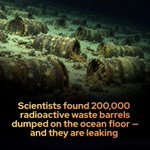
Over 200,000 barrels of radioactive waste were dumped into the Atlantic Ocean, and scientists have confirmed the containers are heavily corroded and leaking. Between 1949 and 1982, European nations disposed of over 150,000 tons of low-level radioactive waste by sinking thousands of steel drums into the deep waters of the northeastern Atlantic. In a historic 2026 expedition led by France's National Center for Scientific Research (CNRS), scientists used the crewed submersible Nautile to plunge more than 15,400 feet down to examine these dump sites directly. What they captured was a haunting subsea reality: heavily degraded containers leaking material onto the ocean floor. Paradoxically, these rusted radioactive tombs have become artificial reefs, covered in sponges and anemones while crabs and deep-sea microbes seek shelter within their corroding frames. While shipboard measurements of collected water, sediment, and marine organisms detected radioactive isotopes like cesium-137 and cobalt-60, scientists emphasize that the levels did not pose an immediate hazard to the research team. However, the long-term ecological consequences remain deeply uncertain. The NODSSUM research project is currently conducting intensive laboratory analyses to determine if and how these radioactive materials are accumulating within the local marine food web. The findings underscore the lasting legacy of mid-20th-century ocean dumping, forcing a modern re-evaluation of how our oceans cope with the toxic remnants of the early nuclear age. source: Starr, M. (2026). 150,000 Tons of Radioactive Waste Were Dumped in The Atlantic. Decades Later, It's Visibly Oozing. ScienceAlert.
33
108
172
7,074
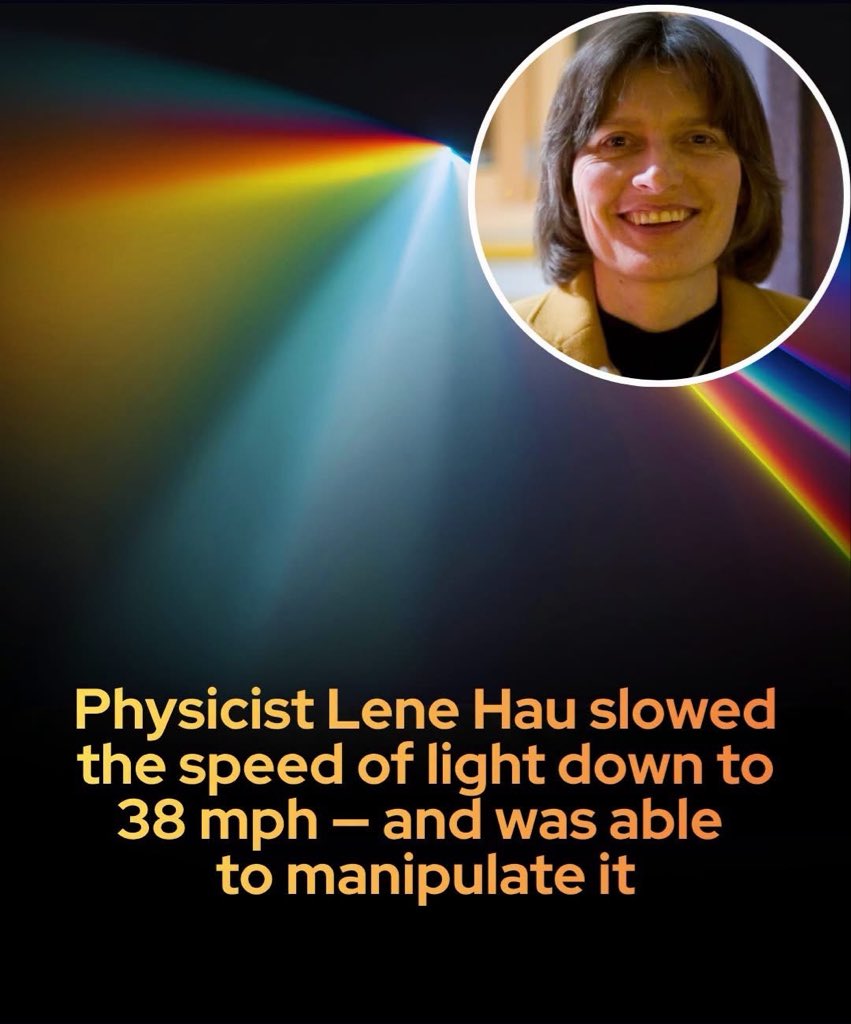
🚨 In a mind-bending physics breakthrough, Harvard researchers successfully slowed light down to just 38 miles per hour. In a stunning feat that challenged the conventional boundaries of physics, Danish physicist Dr. Lene Vestergaard Hau and her team at Harvard University successfully slowed a pulse of light to a mere 38 miles per hour (17 meters per second). They accomplished this in experiments performed in 1999 using a state of matter called a Bose-Einstein condensate — a cloud of sodium atoms cooled to just a billionth of a degree above absolute zero — the researchers essentially transformed a highly opaque medium into an incredibly dense, molasses-like trap. Normally, light zips through space at an astonishing 186,282 miles per second, making this dramatic reduction a staggering 20-million-fold slowdown that effectively tamed the universe's speed limit. The implications of this breakthrough stretch far beyond a fascinating laboratory trick. By drastically reducing the speed of light, and later proving it could be stopped entirely, Dr. Hau’s research opened unprecedented doors for quantum information processing and optical communications. In the future, this ability to hold, manipulate, and restart light pulses could lead to ultra-secure quantum cryptography and vastly more powerful quantum computers. What once seemed like a theoretical impossibility has now laid the groundwork for a technological revolution, transforming our fundamental understanding of how light interacts with matter. source: Hau, L. V., Harris, S. E., Dutton, Z., & Behroozi, C. H. Light speed reduction to 17 m per second in an ultracold atomic gas. Nature.
12
47
177
5,899
🚨 A staggering 1.1 billion tons of ice has just been discovered hiding in Utah’s mountains While traditional glaciers across the globe are rapidly shrinking due to rising temperatures, Utah’s 836 documented rock glaciers are quietly preserving immense reserves of frozen water. These unique formations look like ordinary, rocky mountain slopes on the surface, but underneath, a dense mix of ice and rock slowly creeps downhill — with many ice formations stretching more than 120 feet deep. Because their thick blanket of rocky debris scatters conventional radar signals, scientists from the University of Utah used highly sensitive gravity measurements to peer inside the Timpanogos Rock Glacier. By measuring the minute gravitational differences caused by low-density ice compared to the heavy surrounding bedrock, researchers reconstructed the glacier’s interior in 3D, revealing that its core is up to 83% pure ice. By extrapolating these localized findings across the state, scientists estimate that Utah’s rock glaciers hold roughly 1.1 billion U.S. tons of hidden ice. This natural armor of rock and sediment insulates the underlying ice from surface heat, allowing these landforms to act as reliable, long-term water towers. As global temperatures continue to rise, understanding and protecting these subterranean reservoirs becomes increasingly critical. Overlooking these hidden glaciers risks miscalculating mountain water budgets, which could threaten downstream ecosystems, local agriculture, and public drinking water systems that millions rely on. source: Cvijanovich, B., Thorne, M. S., Pachhai, S., Anderson, L. S., Tochimani-Hernandez, I., Hardwick, C. L., & van Dam, T. (2026). The Internal Ice Content of Timpanogos Rock Glacier, Utah, USA From 3-D Bayesian Inversion of Gravity Data. Journal of Geophysical Research: Earth Surface, 131(8).
19
43
179
20,687
🚨 Scientists have engineered a common probiotic to act as a cancer-seeking 'drug factory,' completely eradicating 43% of colorectal tumors in preclinical trials. The study, led by researchers at Columbia University, utilized a modified strain of Escherichia coli Nissle 1917, a safe gut microbe. Because tumors provide an oxygen-low, nutrient-rich environment where the immune system is suppressed, the injected bacteria naturally migrate to and multiply inside the cancerous cells. Once established, these engineered microbes act as tiny localized drug factories, converting a separately administered, non-toxic compound into a potent chemotherapy drug directly at the tumor site, minimizing damage to surrounding healthy tissue. To maximize effectiveness, the probiotic was also engineered to deliver a powerful dual-action immune boost. It releases an immune-stimulating protein to recruit the body's natural defenses, alongside a specialized nanobody that unmasks cancer cells, preventing them from hiding from the immune system. This 'triple-whammy' therapy—combining localized chemo, immune stimulation, and immune checkpoint blockade—completely eliminated established colorectal tumors in 43% of treated cases in preclinical trials. By proving that living medicines can reprogram tumor microenvironments, this breakthrough offers a promising, highly precise alternative to conventional, high-toxicity treatments. source: Yang, Z., Im, J., Chen, N., Mariuzza, D. L., de los Santos-Alexis, K., Li, F., Ballister, E. R., Ringham, O. R., Danino, T., & Arpaia, N. (2026). Engineered probiotics for tumor-targeted combination chemoimmunotherapy. Science Translational Medicine, 18(867), eady2289.
11
121
499
12,995
Simple dietary shifts have been shown to rapidly reverse the key biological markers of aging. The study, from scientists at the University of Sydney, reveals that most individuals can turn back their body's internal clock in as little as four weeks. Researchers tracked 104 Australians aged 65 to 75, randomly placing them on four different diets with varying balances of fat, protein, and carbohydrates. To measure their biological age—which reflects how well the body actually functions compared to one's chronological age—the scientists evaluated 20 critical health biomarkers, including cholesterol, insulin levels, and C-reactive protein, a primary indicator of systemic inflammation. Shockingly, three out of the four groups exhibited marked reductions in their biological age scores after only a month on their new meal plans, proving that aging-related markers can respond remarkably fast to dietary intervention. While all participants consumed the same portion of daily calories from protein, the sources and macronutrient ratios made a substantial difference. The most pronounced improvements occurred in the group eating an omnivorous diet that was lower in fat and higher in carbohydrates, consisting of roughly 53% carbohydrates, 28% to 29% fat, and 14% protein. Groups that switched to semi-vegetarian diets rich in plant-based proteins also enjoyed a decrease in their biological age. Conversely, those who stuck to a high-fat omnivorous diet—closest to typical Western eating habits—saw no physiological improvement. Though researchers caution that longer trials are required to confirm if these changes translate to a longer lifespan or reduced disease risk, the findings suggest that small, practical adjustments later in life can yield rapid health dividends. source: Andrews, C. J., Ribeiro, V. R., Gosby, A., Le Couteur, D. G., Raubenheimer, D., Tan, J., Simpson, S. J., & Senior, A. M. (2026). Short-term dietary intervention alters physiological profiles relevant to ageing. Aging Cell.
13
46
152
6,980
Wisdom teeth may be more biologically valuable than they look. Inside their soft dental pulp is a population of dental pulp stem cells capable of developing into several specialized cell types. These cells are especially interesting because wisdom teeth are routinely extracted and discarded, making them a relatively accessible source of a person’s own stem cells without collecting them from bone marrow. Researchers have already shown strong potential for bone regeneration. In laboratory and animal studies, DPSCs can become bone-forming cells, promote blood-vessel formation and help regenerate damaged bone when combined with suitable biological scaffolds. Their origin makes them particularly interesting for neuroscience too. Dental pulp stem cells arise from neural-crest tissue during development and can display neuron-like characteristics under laboratory conditions. Researchers are studying their ability to support nerve growth, reduce inflammation and release molecules that protect damaged neural tissue. Heart research has also explored DPSCs and the substances they release for repairing damage after cardiac injury. Much of the apparent benefit appears to come not simply from turning into heart cells, but from releasing signaling molecules that encourage blood-vessel growth, regulate inflammation and support surrounding tissue. But these applications are still largely experimental. There is not currently an established treatment where doctors take your wisdom tooth and use its stem cells to routinely repair your brain, heart or bones. Most evidence outside dentistry remains preclinical. So throwing away a wisdom tooth may technically mean throwing away an unusual source of stem cells—but turning those cells into reliable treatments for major organ damage is the challenge scientists are still working to solve. Source: PubMed; Stem Cells International; BMC Oral Health
25
146
439
30,875
Children raised with religion have a significantly harder time distinguishing what can actually happen in the world, research shows. According to a study, published in Cognitive Science by researchers at Boston University, a child's religious upbringing plays a critical role in shaping their fundamental skill to tell what can and cannot happen. In tests of five- and six-year-olds, researchers compared how kids from secular and religious backgrounds evaluated different types of narratives. While every child correctly identified protagonists in realistic stories as real, their reactions diverged dramatically when introduced to fantastical tales. Secular children easily identified fantastical, magic-based stories as fictional, whereas children with religious exposure — either through church attendance, parochial school, or both — struggled to differentiate the impossible elements from reality. Time and again, they were willing to accept things that are fundamentally impossible. The researchers concluded that exposure to religious teachings, particularly narratives depicting divine miracles, can recalibrate a child’s generic receptivity to the impossible. Rather than evaluating events through a lens of ordinary physical laws, children raised in religious settings are taught to accept that supernatural or unexplained events can actually occur. To this end, the authors note that this cognitive shift doesn't necessarily represent a reasoning failure, but rather a different set of rules for what is plausible. In other words, a religious upbringing doesn't change how often children rely on cause-and-effect rules to judge what can happen. It changes which causes they accept. For parents and educators, the findings highlight just how powerfully adult testimony and cultural exposure can rewrite the boundaries of a child's physical world. source: Payir, A. et al. Children's Ideas About What Can Really Happen. 2021. Cognitive Science. Corriveau, K. H., Chen, E. E., & Harris, P. L. Judgments about fact and fiction by children from religious and nonreligious backgrounds. Cognitive Science, 39(2), 353-382.
14
27
63
2,188
A spike in flesh-eating bacteria has claimed 10 lives in the U.S, prompting dire warnings from health officials. The naturally occurring bacterium Vibrio vulnificus, commonly known as "flesh-eating bacteria," has officially claimed ten lives across Florida and Louisiana so far this year. According to state health departments, Louisiana has reported six fatalities, while Florida has confirmed four. This microscopic threat thrives in warm, brackish coastal waters and is typically contracted when open wounds are exposed to seawater or when individuals consume raw or undercooked seafood, particularly oysters. While healthy individuals may suffer only mild symptoms, the infection can trigger necrotizing fasciitis — a rapid tissue-destroying illness — and enters the bloodstream with a devastating 50 percent mortality rate if not treated immediately. Health experts warn that the risk is rising as climate change drives ocean temperatures higher and intensifies severe weather events, pushing the bacterium into northern regions where it was previously rare. Hurricanes and major storms are particularly dangerous, as they leave behind standing floodwaters that increase potential exposure. To prevent life-threatening infections, the Centers for Disease Control and Prevention urges beachgoers to stay out of brackish or saltwater if they have cuts, scrapes, or recent piercings. Public health officials emphasize that prompt medical intervention is vital, warning that early symptoms like swelling and redness can escalate into a medical emergency within hours. source: FOX 9. (2026, September 16). Fourth Florida resident dies after contracting flesh-eating bacteria linked to oysters.
8
11
803
Fiber is one of the clearest dietary factors associated with a lower risk of colorectal cancer, and the protection appears to increase as intake rises. Large studies consistently find that people who eat more fiber—especially from whole grains, fruits, vegetables, beans and other plant foods—have a lower risk of developing colorectal cancer. Research reviewed by the World Cancer Research Fund estimates that every additional 10 grams of dietary fiber per day is associated with roughly a 7% reduction in colorectal cancer risk. Part of the explanation is mechanical. Fiber increases stool bulk and helps waste move through the intestine faster, reducing the amount of time potentially harmful compounds remain in contact with cells lining the colon. But the gut microbiome may be just as important. Certain bacteria ferment fiber and produce short-chain fatty acids such as butyrate. Butyrate is an important energy source for colon cells and has been linked to anti-inflammatory effects and regulation of processes involved in abnormal cell growth. High-fiber foods also tend to contain vitamins, minerals and other plant compounds, while helping with body-weight regulation. That matters because excess body fat itself is associated with increased colorectal cancer risk. Fiber is not a guarantee against cancer, and colorectal cancer has many risk factors, including age, genetics, smoking, alcohol, obesity and consumption of processed meat. But increasing fiber is one of the dietary changes supported by substantial evidence. For most adults, roughly 25–30 grams or more of fiber each day is a useful target, preferably coming from whole foods rather than relying entirely on supplements. Source: World Cancer Research Fund; American Institute for Cancer Research; National Cancer Institute
5
26
92
2,673
🚨 A major study has revealed that the human brain is actually two separate organs fused together. For centuries, science has treated the human brain as a single, unified organ that grows from a single pool of early cells. However, researchers at Stanford Medicine have completely upended this textbook definition. Published in the journal Nature Neuroscience, their study shows that what we call the brain is actually two ancient, independent nervous systems assembled side by side over evolutionary history. By analyzing mouse embryos, the team discovered that the forebrain and midbrain—which govern reasoning, language, and consciousness—develop from an entirely different set of progenitor cells than the hindbrain, which controls vital autonomic functions like heartbeat, breathing, and swallowing. This biological separation explains why scientists have struggled for decades to grow specific types of brainstem cells in laboratories, as they were trying to coerce forebrain cells into hindbrain functions. Armed with this new blueprint, the Stanford team successfully guided human stem cells to become fully functional hindbrain motor neurons in a petri dish. This breakthrough provides a critical experimental platform for studying devastating neurodegenerative disorders, such as amyotrophic lateral sclerosis (ALS) and spinal muscular atrophy, where the degeneration of these specific neurons robs patients of the ability to breathe and swallow. source: Dundes, C., Jokhai, R., & Loh, K. (2026). Human brain is two separate organs joined by evolution. Nature Neuroscience.
2
12
31
1,136
Tomatoes and avocados make a powerful nutrient combination. Tomatoes provide lycopene, an antioxidant carotenoid that helps protect cells from oxidative damage and may support heart health. The healthy fats in avocado can improve lycopene absorption, helping the body use more of it from the same meal. Source: The Ohio State University, Journal of Nutrition.
4
67
203
4,205
🚨 The FDA has greenlit a first-of-its-kind molecule that helps human immune cells target and destroy cancer cells naturally. In a significant leap forward for cancer immunotherapy, the FDA has cleared a clinical trial for GTB-5550, an investigational drug designed to mobilize the body's innate immune system against blood cancer. Developed by GT Biopharma, this innovative therapy utilizes a proprietary platform known as TriKE (Tri-specific Killer Engager). Unlike traditional treatments, this single molecule performs three critical tasks simultaneously: it anchors to a specific protein on the cancer cell, binds to an activating receptor on the patient's natural killer (NK) cells to form an immunological bridge, and delivers a vital immune-signaling protein that forces those killer cells to multiply and sustain their attack. This regulatory milestone specifically targets multiple myeloma, a bone marrow cancer that remains notoriously difficult to cure and highly prone to relapse. By leveraging NK cells—part of the innate immune system that can rapidly destroy diseased cells without prior priming—this therapy offers a promising alternative to complex, personalized treatments like CAR-T. Because the drug can be administered subcutaneously and acts as an 'off-the-shelf' solution, researchers hope it will bypass the severe side effects and production delays that often limit existing cell therapies, bringing a highly accessible, powerful new weapon to patients who have exhausted other options. source: GT Biopharma, Inc. (2026). GT Biopharma Announces Potential New Indication for GTB-5550, a B7-H3-Targeted Natural Killer (NK) Cell Engager, for Multiple Myeloma. GlobeNewswire.
7
51
160
5,450
The connection between the mouth and the brain is becoming an increasingly important area of Alzheimer’s research. A major suspect is Porphyromonas gingivalis, a bacterium strongly associated with chronic gum disease. Researchers have detected this bacterium and some of its toxic enzymes, called gingipains, in brain tissue from people with Alzheimer’s. Scientists think chronic periodontal infection could influence the brain in several ways. Bacteria or their components may enter the bloodstream through inflamed gums, while persistent inflammation elsewhere in the body may also contribute to inflammation in the brain. Laboratory and animal studies suggest P. gingivalis can trigger neuroinflammation and processes involving amyloid-beta and tau—the two proteins most strongly associated with Alzheimer’s pathology. A major 2026 review found that people with periodontitis had about a 1.5-times higher observed risk of Alzheimer’s disease. However, the researchers rated the overall certainty of this evidence as very low, meaning association does not yet prove that gum disease causes Alzheimer’s. Alzheimer’s is a complex disease involving age, genetics, cardiovascular health and numerous biological processes. The emerging “oral-brain axis” suggests the mouth may be one additional piece of that much larger puzzle rather than a single explanation for the disease. It gives researchers another reason to investigate oral health as part of whole-body health—and whether preventing or treating chronic gum inflammation could eventually help reduce neurological risk. Source: Special Care in Dentistry; hLife; National Institute on Aging
5
24
47
1,638