

A global top-ten university, where scientific imagination leads to world-changing impact. Science | Engineering | Medicine | Business #OurImperial 💙
London
- Tweets 27,550
- Following 3,153
- Followers 186,843
- Likes 24,571





Pinned Tweet

We’re University of the Year! 🎉
We’ve been named Uni of the Year by @thetimes in recognition of our student experience and graduate prospects.
We also came first for:
🩺 Medical School of the Year
💼 University of the Year for Graduate Employment
imperial.ac.uk/news/articles…
6
27
120
19,599
Imperial College London retweeted

We're delighted to see Professor Paul Fennell elected a Fellow of the @RAEngNews.
The honour recognises his outstanding contributions to clean energy research and the engineering profession.
#RAEngFellows #EngineeringBetterLives

1
3
10
653
Imperial College London retweeted
🎉We’re #1!
Delighted to share that @imperialcollege's Department of Chemical Engineering has been ranked first in the UK by @thetimes Good University Guide 2027.
A brilliant achievement, and one built over many years through the ambition, dedication, and hard work of our staff and students!

4
11
866
Imagine if we could build an atlas of human immune responses to candidate vaccines...
By understanding how the human immune system responds to a wide range of pathogens, researchers at Imperial are helping identify vulnerabilities, predict responses and strengthen preparedness for future outbreaks.
Read Professor Robin Shattock's article 🔗 imperial.ac.uk/Stories/build…
2
2
10
2,782
Synthetic biology offers malicious actors a toolbox to threaten the environment and human lives. But it also contains the weapons to fight back.
From faster diagnostics to new vaccines and monitoring tools, synthetic biology is opening up powerful new possibilities for biosecurity.
Imperial's Professor Karen Polizzi explores how our researchers are harnessing these advances to help build a safer, more resilient future.
🔗 imperial.ac.uk/Stories/harne…
2
9
2,889
Biosecurity threats are increasing, but if we design early-detection systems based entirely on what we already know, there will be gaps that leave populations vulnerable to the next emerging pathogen.
As we prepare to lead the biosecurity conversation at UNGA, Professor Graham Cooke makes the case for a new approach to surveillance that could strengthen global biosecurity and help the world respond faster to future outbreaks.
🔗 imperial.ac.uk/Stories/the-c…
8
9
3,601
Fingerprints of the next disease outbreak could be detected in wastewater before people start showing symptoms - buying time to prepare.
We're discussing biosecurity all week in the run-up to UNGA. Here, Imperial Professor Leon Barron writes about working to scale this approach for global biosecurity.
🔗 imperial.shorthandstories.co…
1
1
5
2,421
How do we advance high-consequence biological research safely and responsibly?
In the lead-up to UNGA, Professor Wendy Barclay explores the principles, safeguards and international collaboration needed to support biosecurity research while maintaining public trust and maximising scientific benefit.
🔗 imperial.ac.uk/Stories/estab…
3
11
2,748
How do we prepare for the next pandemic threat?
As we prepare to lead the biosecurity conversation at UNGA, Imperial Professor Azra Ghani explores the growing biosecurity challenges facing the world and why stronger global partnerships will be critical to protecting public health in the years ahead.
imperial.ac.uk/Stories/share…
2
2
7
2,701
Imperial College London retweeted

Twenty-five H&F students got a taste of healthcare careers this summer, thanks to work experience at @imperialcollege.
It was organised through the H&F Pathway Bond, which connects local young people to careers on their doorstep.
More: lbhf.gov.uk/news/2026/09/hf-…


2
3
891
Imperial has been ranked fifth by The Guardian's University Guide 2027 🎉
From teaching to feedback, career prospects to investment in students, this ranking reflects the high-quality experience our undergrads and postgrads can expect when studying here.
Find out more ⬇️ theguardian.com/education/ng…
4
5
19
9,147

Dix ans après le Brexit, les liens scientifiques franco-britanniques retrouvent leur vivacité ! 🇫🇷🇬🇧
Le partenariat entre le CNRS et @imperialcollege témoigne de cette dynamique, avec 35 projets et 70 doctorants depuis 2019. cnrs.fr/fr/actualite/dix-ans…
1
4
11
3,787
Imperial College London retweeted

Voices from the Lab is our new video series highlighting our scientists and researchers and the work they do to help us fight against #malaria. 🦟
Tasmin Nixon is a research technician at the Department of Life Sciences at Imperial College London. Watch the video to find out more about their journey into malaria research and what their role entails. Check out her blog here: targetmalaria.org/latest/new…
#WorldMosquitoDay #GeneDrive #MalariaResearch @imperialcollege @ImperialLifeSci

1
3
4
852
Imperial College London retweeted
Most people know mosquitoes as the tiny insects that bite, itch and transmit #malaria. Few think about what happens behind the doors of the laboratories where the scientists study them every day 🦟🔬
For #WorldMosquitoDay, Dr @Alekos_Simoni, Technical Support Specialist at Target Malaria, shares 10 things you probably didn't know about mosquito laboratories. From hand-collected eggs and a race against the clock during microinjection, to larvae that glow under UV light and colonies maintained across generations.
Every discovery starts with understanding the mosquito itself. It's the essential first step toward evidence-driven tools that could help reduce the burden of malaria across Africa.
Read more here: targetmalaria.org/latest/blo…
#GeneDrive #MalariaResearch

6
4
647
Imperial College London retweeted
Congratulations to Matteo Vitale, from our team at @ImperialLifeSci at @imperialcollege, whose image "Last Minute Packing" has won first prize in Imperial College London's Life Sciences Photography Competition 2026!
The photo captures sperm development in the malaria mosquito Anopheles gambiae — work that feeds directly into malaria vector control research 🦟
Read more: imperial.ac.uk/news/articles…
#Malaria #EndMalaria #MalariaResearch #ScienceCommunication

2
2
689
Imperial College London retweeted

How does a chance conversation impact science? 🤔
25 years ago, our soon-to-be Dean, Prof @OkMatar met Prof Richard Craster at an @ImperialCollege workshop. Realising they were both working on a complex mathematical equation, they left to tackle it – and never went back.

1
1
4
622
Imperial College London retweeted
How does a chance conversation impact science?🤔
25 years ago, our Head of Department, Prof @OkMatar
met Prof Richard Craster at an @imperialcollege
staff workshop.
Realising they were both working on a complex mathematical equation, they left to tackle it – and never went back. That chance encounter grew into a decades-long research partnership, pioneering discoveries, and a spinout company,
@QuaisrLabs.
Their serendipitous story featured in the
@ObserverUK article, ‘The science of serendipity’, & we sat down with them to explore how that meeting changed their careers.
📷 Watch below
The Observer article: observer.co.uk/news/science-…
#OurImperial #ImperialScience #SerendipityDay

1
7
12
1,741
One in six adults in England report feeling lonely "often or always", according to one of the largest loneliness studies ever conducted in a single country.
Imperial researchers say loneliness affects people of all ages and should be treated as a public health issue.
Read more ⤵️ imperial.ac.uk/news/articles…
7
4
17
7,117
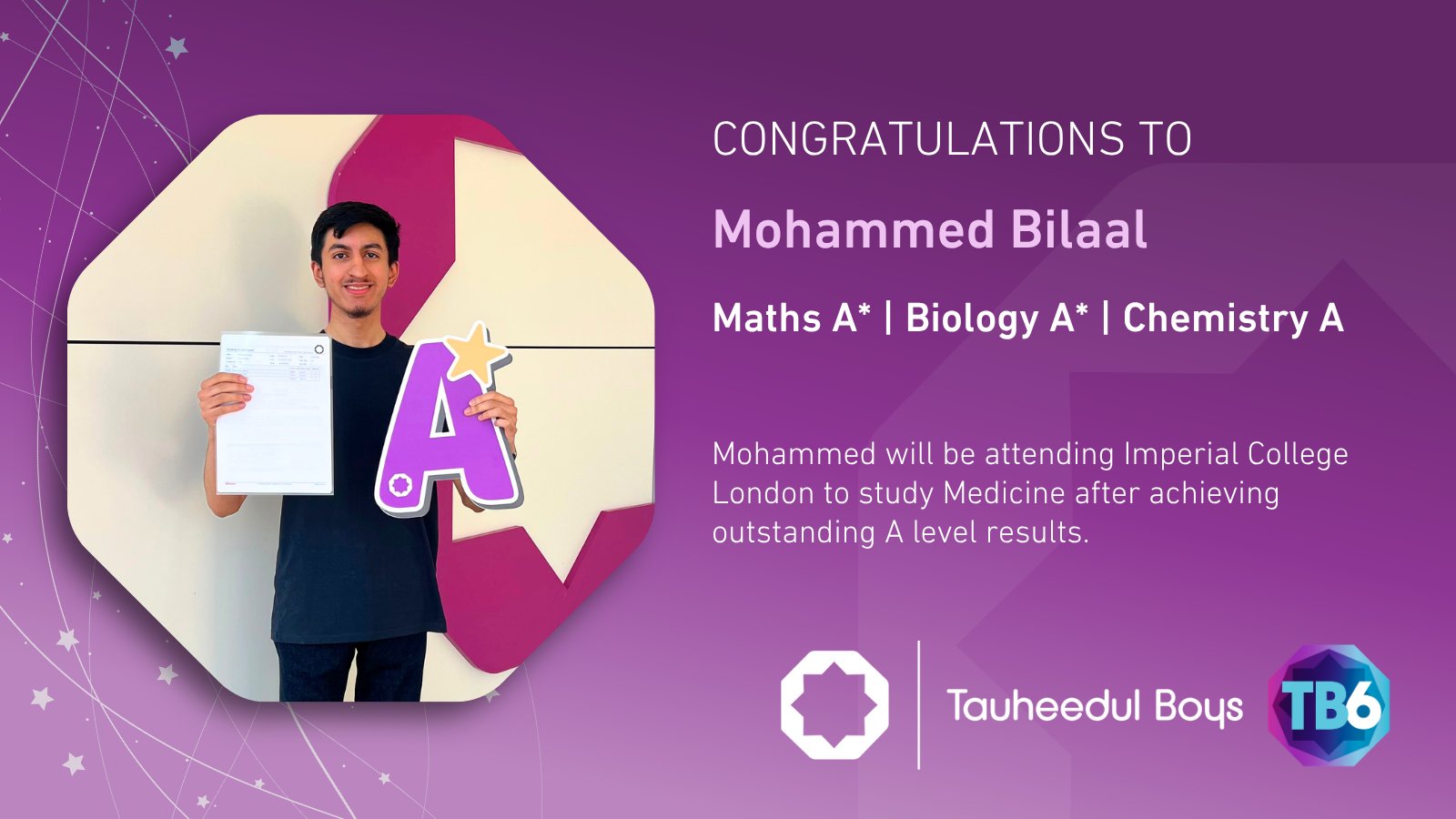
Congratulations Mohammed, we can't wait to see you this September! 💙

Congratulations to TB6 student Mohammed on achieving A* in Maths, A* in Biology and A in Chemistry.
Mohammed will be moving on to study Medicine at @imperialcollege.
#TB6 #Alevels #ResultsDay #WeAreStar
@StarAcademies
2
27
7,650
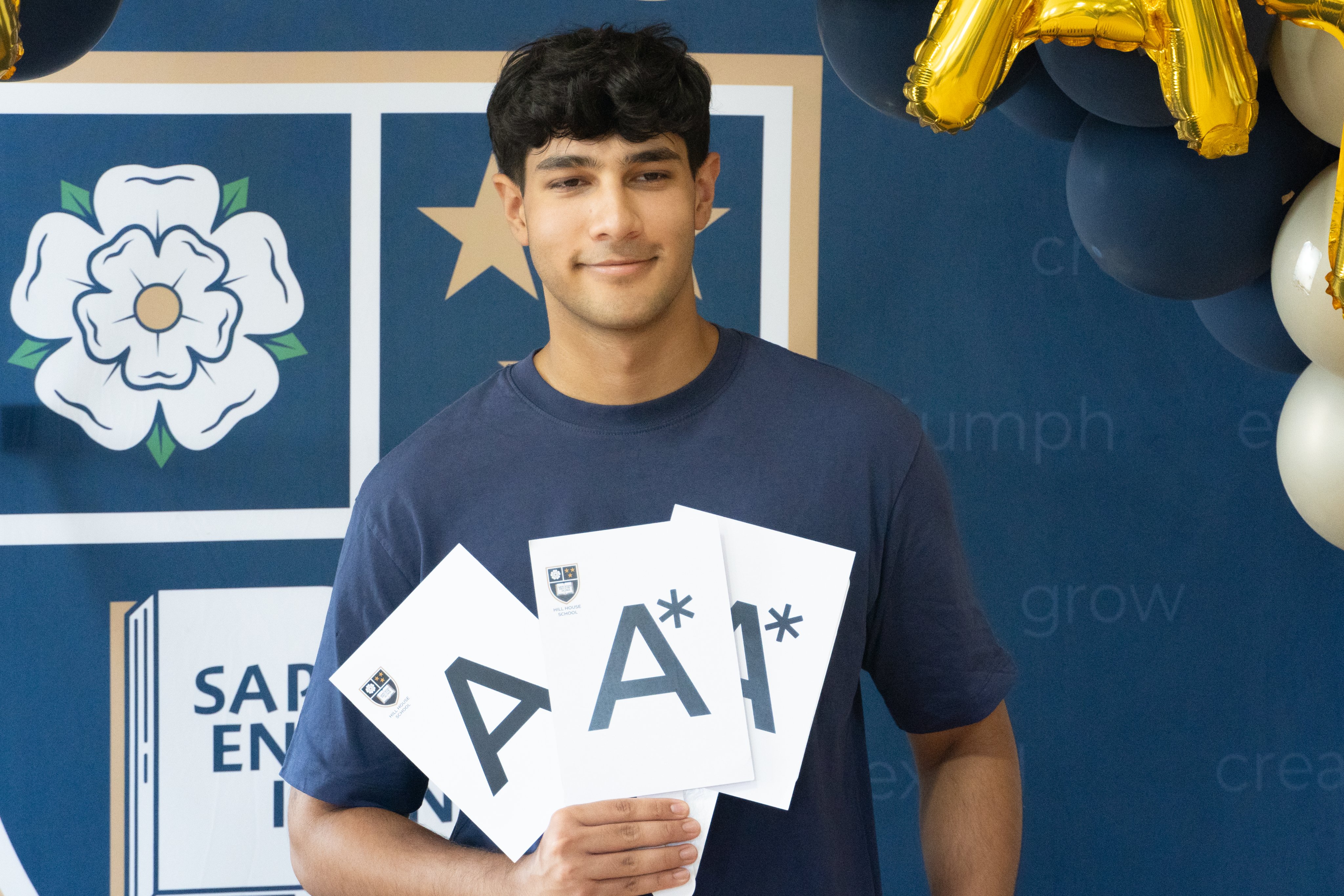
Congratulations Aarav! We can't wait to welcome you in September 💙
Future students and schools - don't forget to tag us in your #Alevelresults posts, so we can celebrate with you!

Congratulations Aarav Goel on securing a place @imperialcollege to study Economics, Finance and Data! #ALevelResultsDay2026
1
23
7,354